Revolutionizing Carbon Credits: A User-Centric Approach to Environmental Impact
Info
My role
UX/UI Designer responsible for the overall design and user experience of the platform.
Team
1 Product Manager, 2 Engineers, 1 QA, and myself.
Delivery date
July 2024
Background
Carbon markets have traditionally been costly, complex, and hard to navigate, making it difficult for businesses to offset their carbon footprint. This project aimed to build an accessible, transparent platform to simplify carbon credit purchases and empower companies to support sustainability.

Process
Research and planning
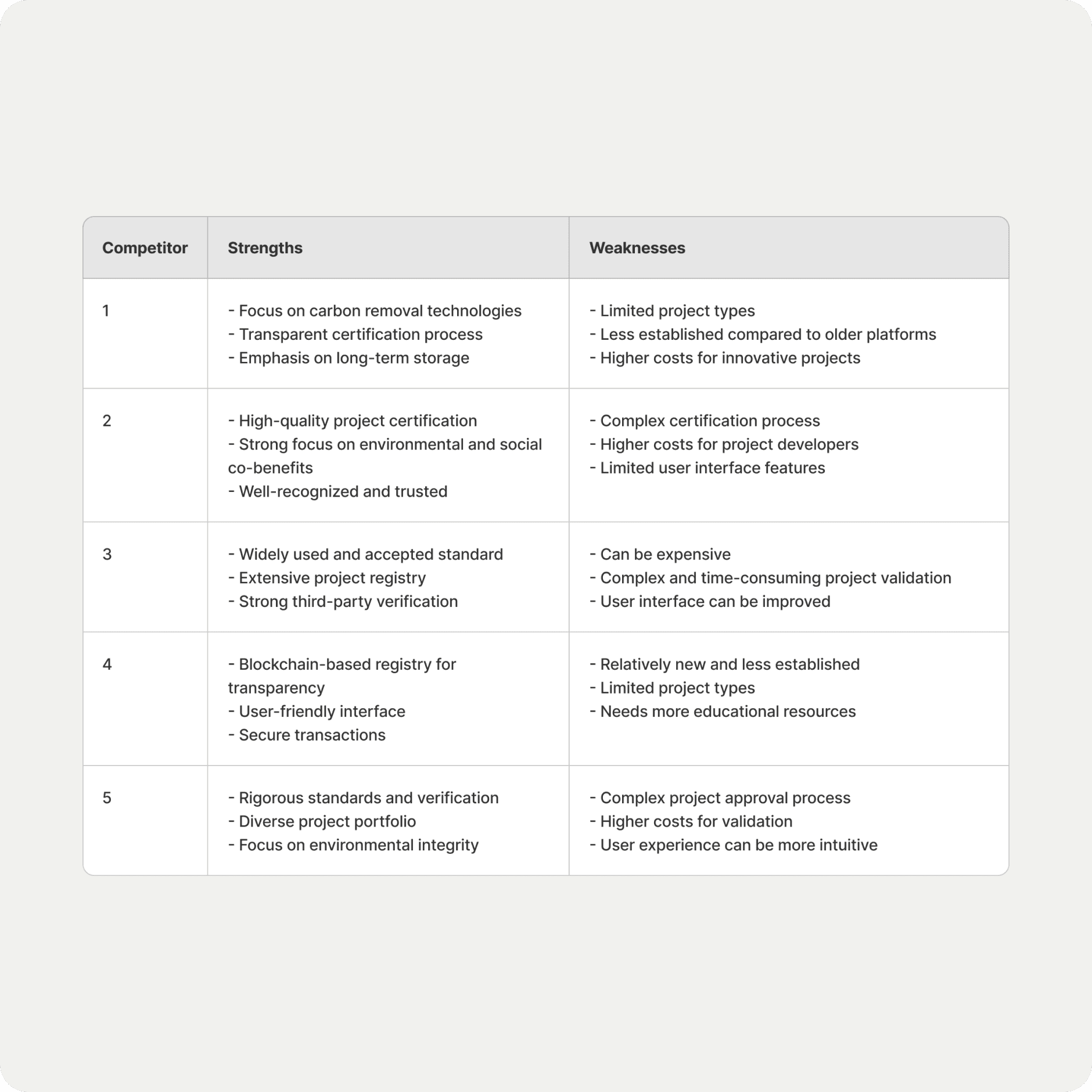
We conducted competitor analysis and interviewed businesses interested in carbon offsets to uncover user pain points: high transaction costs, complex processes, and limited transparency.
Interview Highlights
"It’s hard to understand the credibility of credits and where the funds go. Lower fees and clearer information are essential."
"Transparency is crucial. We need to see tangible impact and verified sources."
Design and Prototyping
The feature definition process focused on addressing key user needs for simplicity, transparency, and ease of use. We prioritized three main areas:
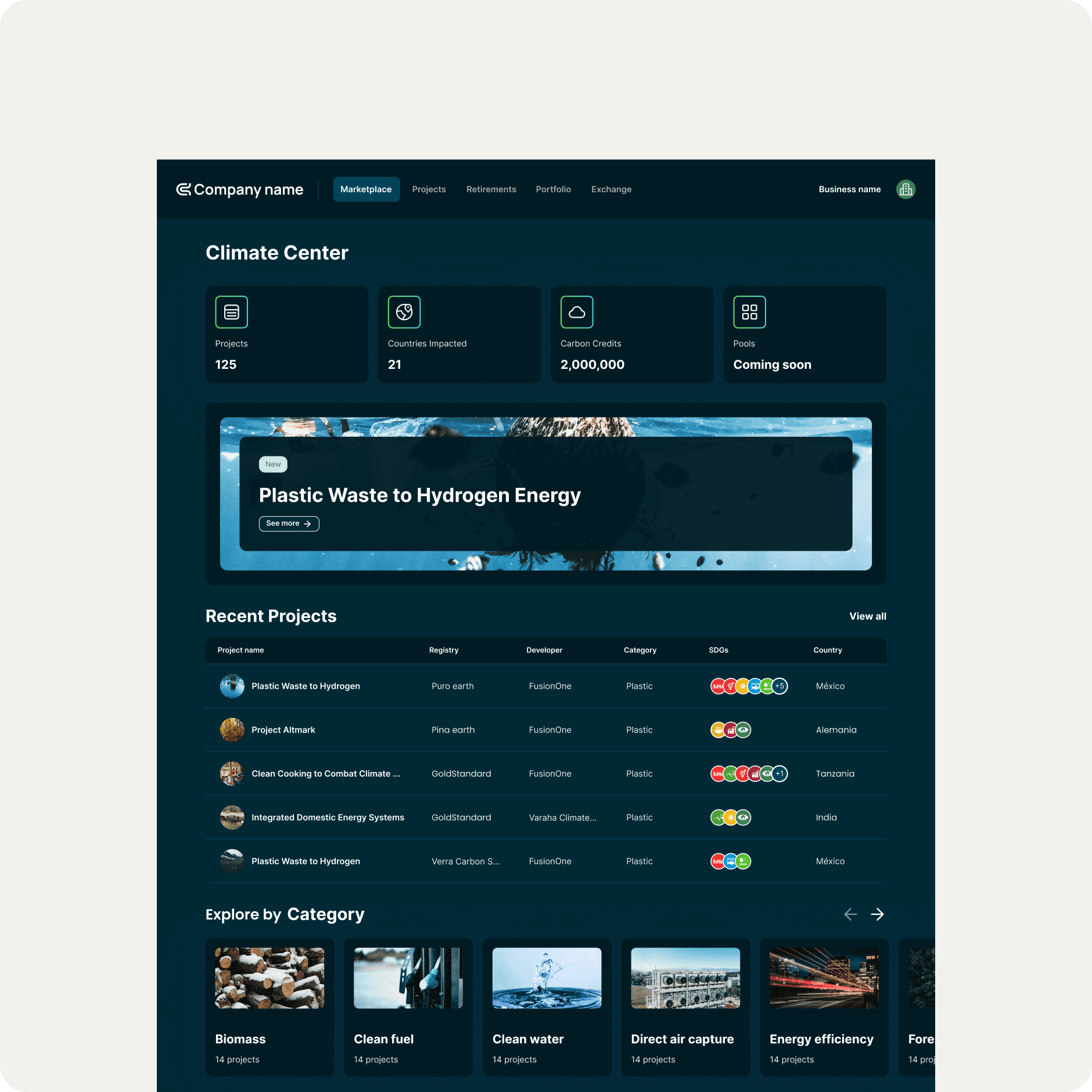
Marketplace Home for easy project exploration
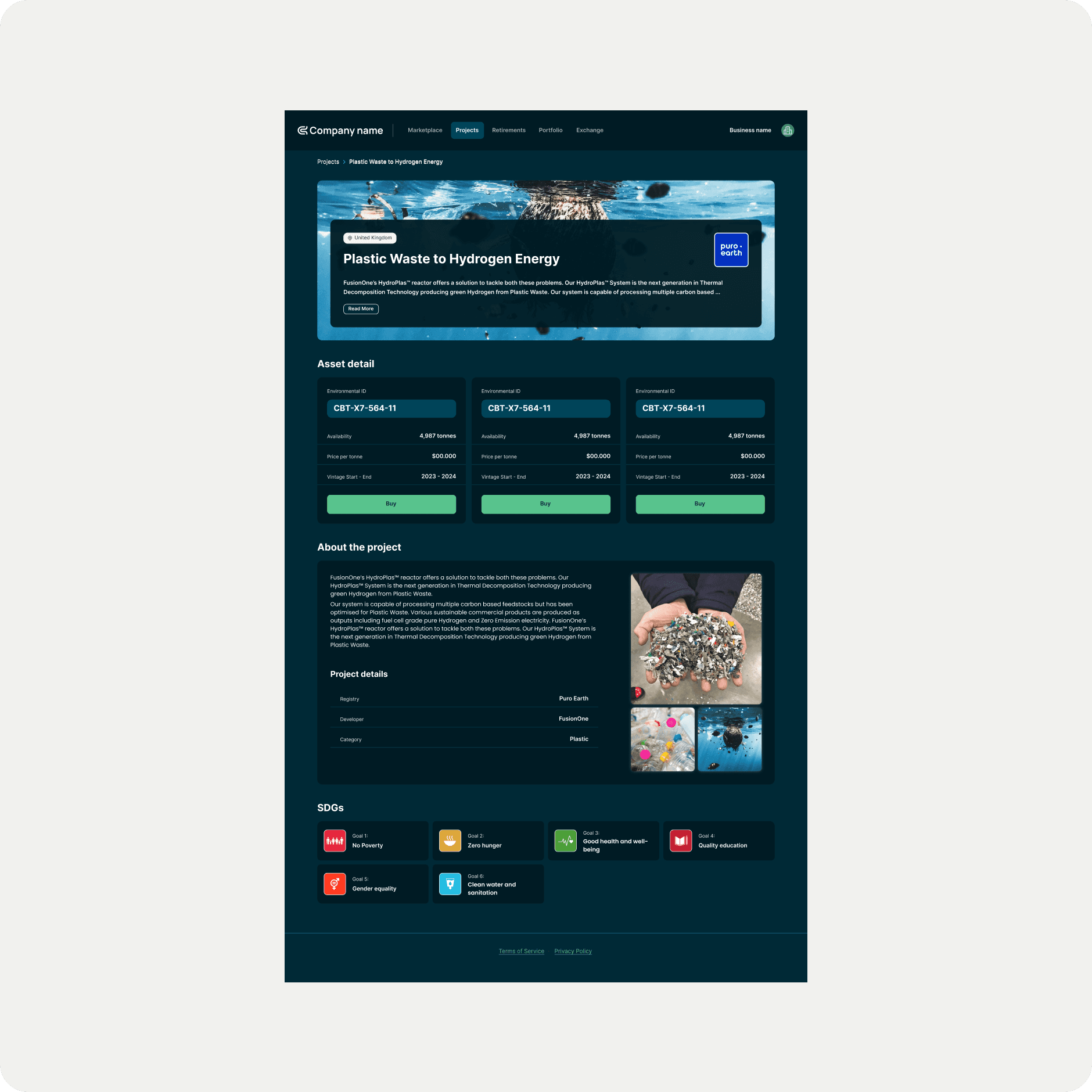
Project Details for transparency
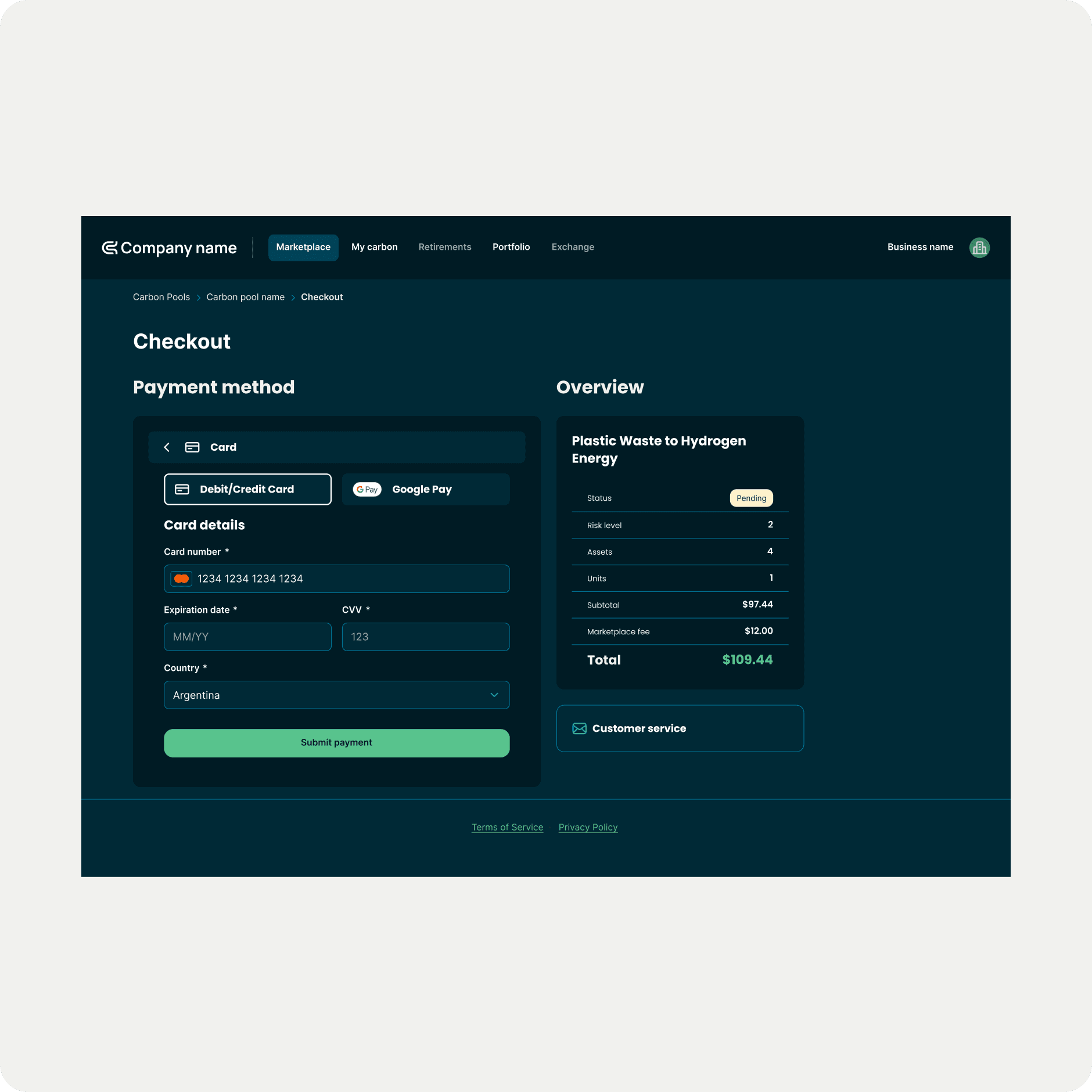
Checkout Process that simplified purchases.
Prototypes were refined through two iterations based on user feedback, enhancing usability and clarity at each stage.

Solution
Marketplace Home
Designed with filters by category and registry, allowing users to easily browse projects. A “Save for Later” feature was added to bookmark projects of interest.
Project Details
Each project displays a description, assets, SDG (Sustainable Development Goals) impacts, verification badges, and an Impact Report with real-time data on the environmental benefits of each credit.
Checkout Process
Streamlined for efficiency with a step-by-step, one-click checkout for returning users, and a summary confirmation screen for transparency.

Results
Reduced Onboarding Time
The onboarding process was shortened by 30%, allowing users to get started quickly.
Increased User Trust
Transparency features like Impact Reporting increased user trust by 25%.